On this page
Liposuction recovery is usually straightforward for most people, but it involves several weeks of swelling and bruising before the results become clear. Many people return to non-physical work within a few days to a week, wear a compression garment for several weeks, and see their final shape emerge over three to six months as swelling settles. This guide explains what to expect during liposuction recovery, though your own experience depends on the areas treated, the amount removed and how you heal.
Below is a general timeline, along with advice on supporting your recovery and the risks to be aware of. Your surgical team’s personalised guidance always takes priority.
Liposuction recovery at a glance
- Time off work: often a few days to a week for non-physical jobs.
- Compression garment: usually worn for several weeks.
- Bruising and swelling: settle over weeks, with swelling lingering longer.
- Exercise: gentle activity early; strenuous exercise usually from about 4–6 weeks.
- Final results: emerge over roughly 3–6 months.
The early days
Expect soreness, swelling, bruising and possibly some leakage of fluid from the small incisions in the first day or two, which is normal. You will usually wear a compression garment straight away to support the tissues and help control swelling. Gentle movement around the home is encouraged to aid circulation, while rest remains important.
The first few weeks
Bruising typically fades over two to three weeks, while swelling is more persistent and can come and go. Many people return to non-physical work within a week, continuing to wear the compression garment as advised. The treated areas may feel firm, numb or lumpy at first, which usually softens over time.
When results appear
Because swelling masks the outcome initially, results appear gradually. Many people see a noticeable improvement within a few weeks, but the final contour usually settles over three to six months, sometimes longer. Patience is important, as judging the result too early can be misleading. You can learn about the procedure on our liposuction page.
Supporting your recovery
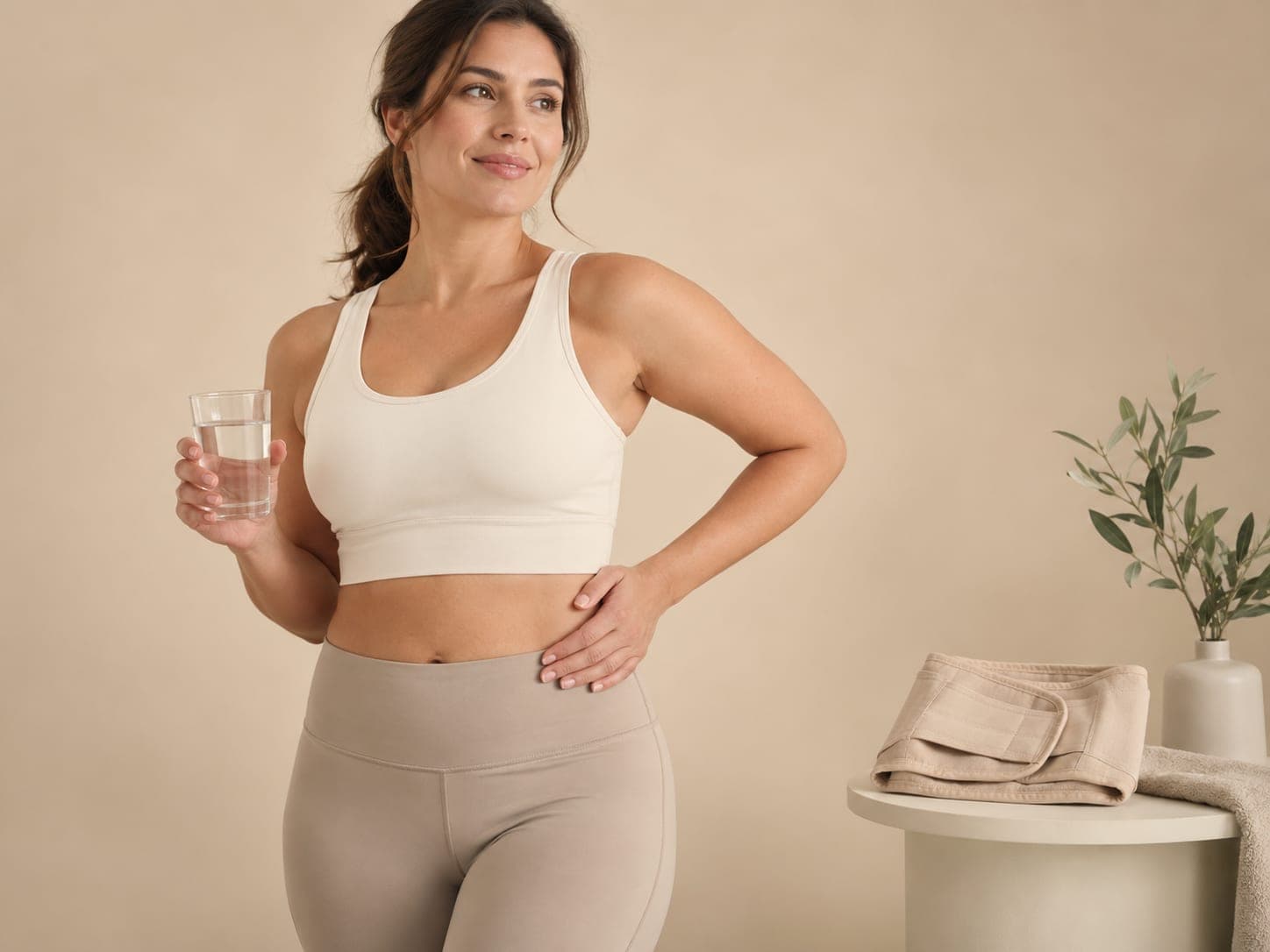
Wearing your compression garment as directed, staying active with gentle movement, keeping hydrated, eating well and not smoking all support healing. Maintaining a stable weight afterwards helps preserve the result, as remaining fat cells can still enlarge with weight gain. Our recovery after surgery resource offers wider guidance, and our risks and recovery resource covers what to expect in more detail.
Returning to activity and exercise
Gentle walking is encouraged early to aid circulation. Light exercise can usually be increased over the first weeks, with more strenuous activity typically reintroduced from around four to six weeks, guided by how you feel and your surgeon’s advice. Listening to your body and not rushing back helps recovery.
Risks and limitations
Liposuction carries risks including bruising, swelling, changes in skin sensation, contour irregularities, asymmetry, fluid collections and, less commonly, infection or blood clots. Results cannot be guaranteed, and liposuction is a contouring procedure rather than a weight-loss method, so significant weight gain afterwards can alter the result. Your surgeon will explain the risks relevant to the areas you are considering.
Is liposuction right for you?
Suitability, and how smooth your recovery is likely to be, depend on your health, the areas concerned and an individual assessment. Being at a stable weight with good skin elasticity often helps results. A consultation allows your surgeon to examine you and set realistic expectations.
How long swelling lasts and when to be patient
Swelling is the main reason liposuction results take time to appear, and it is normal for it to persist and fluctuate for several months. In the early weeks the treated areas may feel firm, tight or numb, and can look larger than the final result because of fluid retention. This gradually improves as your body reabsorbs the swelling and the tissues settle.
Wearing your compression garment as directed, staying gently active and keeping to a stable weight all support this process. It is common to see steady improvement up to around three months, with subtle refinement continuing to six months or beyond. Because of this, it is wise not to judge your outcome too soon. If you notice sudden or marked swelling, increasing pain, redness or a warm, tender area, contact your clinical team, as these can occasionally signal a problem that should be checked.
Supporting a smooth liposuction recovery
A comfortable liposuction recovery comes from realistic expectations, wearing your compression garment and following your surgeon’s aftercare advice. While everyday life often resumes within days, swelling settles and the final contour keeps improving for months. To understand your own likely recovery, a personal assessment is the best step, and you are welcome to arrange a consultation.
Frequently asked questions
How long does liposuction recovery take?
Many people return to non-physical work within a few days to a week, while swelling settles and the final result appears over three to six months. Recovery varies between individuals.
How long do I wear a compression garment?
Usually several weeks, to support the tissues and help control swelling. Your surgeon will advise on the type and duration for you.
When will I see liposuction results?
A noticeable improvement often appears within weeks, but the final contour usually settles over three to six months as swelling resolves.
Is liposuction recovery painful?
Some soreness, swelling and bruising are normal in the early days and are usually well managed with recommended pain relief, easing over the following weeks.
Will the results last?
Liposuction removes fat cells from treated areas, but remaining cells can enlarge with weight gain, so maintaining a stable weight helps preserve the result. Results are not guaranteed to be permanent.
This article is for general information only and does not replace personalised medical advice. Recovery varies between individuals, results cannot be guaranteed, and all surgery carries risks. Suitability can only be determined through an individual consultation with a qualified surgeon.