On this page
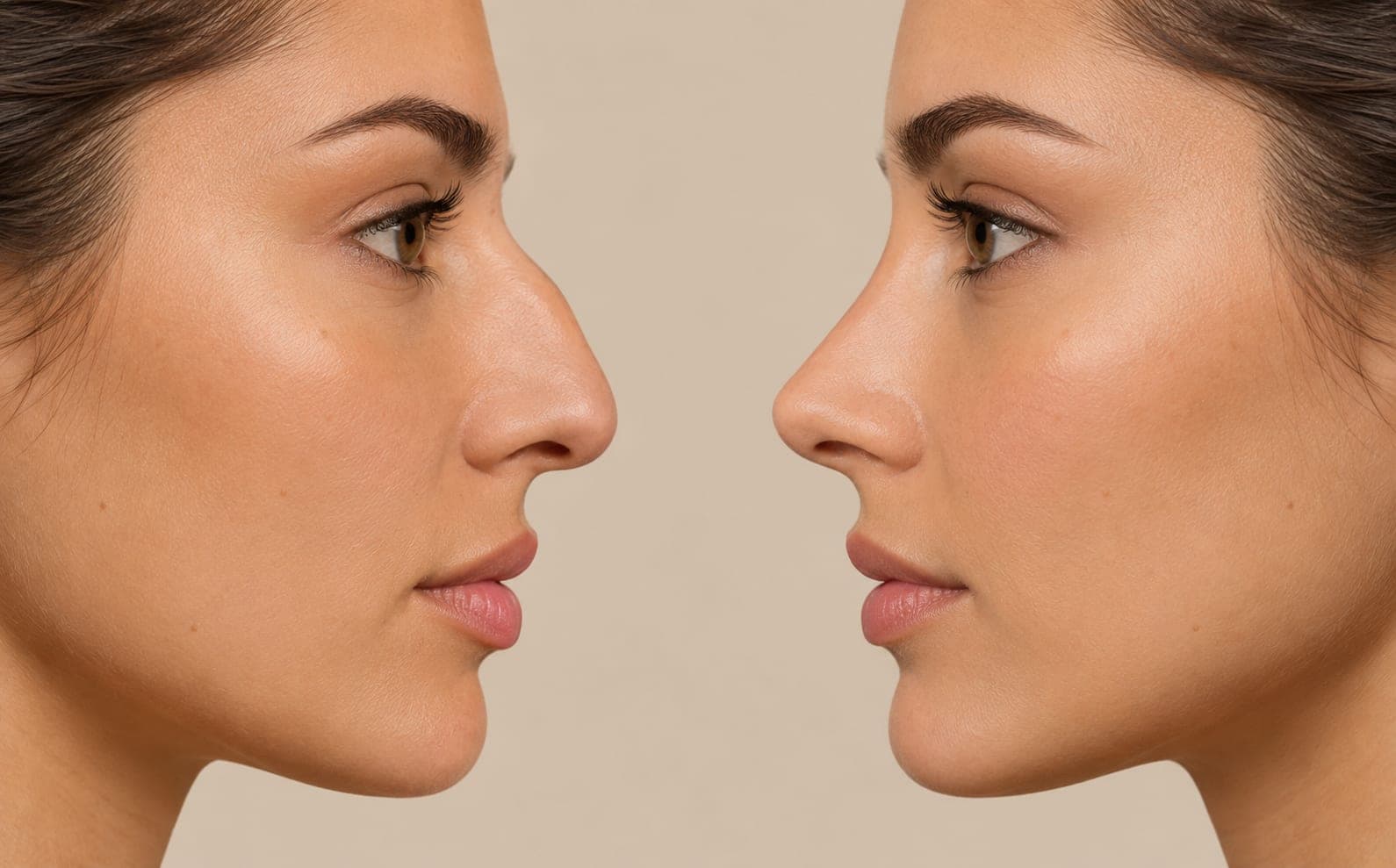
The difference between surgical vs non-surgical rhinoplasty is significant. Surgical rhinoplasty is an operation that changes the underlying bone and cartilage to reshape or reduce the nose, giving a permanent result. Non-surgical rhinoplasty uses dermal fillers to add volume and camouflage certain irregularities, such as a small bump or a slightly uneven bridge, without surgery and with little downtime, but the result is temporary and it cannot make the nose smaller. Neither is universally better; they do very different things.
This balanced guide explains what each can and cannot achieve, who they may suit, and the safety considerations. It is general information and does not replace an individual assessment.
At a glance
- Surgical rhinoplasty: reshapes bone and cartilage; permanent; involves recovery.
- Non-surgical rhinoplasty: uses fillers to camouflage; temporary; minimal downtime.
- Fillers add volume, so they cannot reduce the size of the nose.
- Non-surgical rhinoplasty carries specific safety considerations.
- Suitability depends on your goals, anatomy and an individual assessment.
What surgical rhinoplasty does
Surgical rhinoplasty alters the structure of the nose, and can reduce a bump, refine the tip, narrow the bridge, change the size or improve breathing. Because it changes the framework, the result is long-lasting. It involves an operation, a splint, a recovery period and prolonged settling of swelling. You can read more on our rhinoplasty page.
What non-surgical rhinoplasty does
Non-surgical rhinoplasty uses injectable fillers to add volume in specific places, for example to smooth the appearance of a bump by filling around it, or to add a little definition. It is quick, with minimal downtime, but temporary, typically lasting months. Crucially, it can only add volume, so it cannot make a large nose smaller. Our facial fillers page explains more about injectable treatments.
Key differences
The main differences are permanence and what each can achieve. Surgery makes lasting structural changes and can reduce size, but involves recovery and the risks of an operation. Fillers offer a temporary, non-surgical camouflage of minor irregularities with little downtime, but add volume rather than reduce it and need repeating. Our guide on whether plastic surgery is right for me may help you reflect on your goals.
Who might each suit?
Surgical rhinoplasty may suit someone wanting a lasting change to the size or shape of the nose, or to improve breathing. Non-surgical rhinoplasty may suit someone with a minor irregularity who wants a subtle, temporary improvement without surgery, or who wishes to try a change before committing. An assessment is needed to judge which, if either, is appropriate.
Safety of non-surgical rhinoplasty
Although it avoids surgery, non-surgical rhinoplasty is not without risk. The nose has an important blood supply, and injecting filler here carries a rare but serious risk of affecting blood vessels, which can lead to skin or, very rarely, vision problems. For this reason it should only be performed by a suitably qualified and experienced practitioner who can manage complications. This is an important part of weighing up the option.
Risks and limitations
Surgical rhinoplasty carries the risks of an operation, including bleeding, infection, breathing changes, an outcome differing from what was hoped, and possible revision. Non-surgical rhinoplasty carries risks including swelling, lumps, infection and the rare but serious vascular risks noted above, and it is temporary. Neither can be guaranteed. Your surgeon or practitioner will explain the risks relevant to the option you consider.
Which is right for you?
Whether surgical or non-surgical rhinoplasty, or neither, is appropriate depends on your goals, your nose and an individual assessment. A consultation allows a clinician to examine you, explain realistic outcomes and recommend the safest suitable option.
Trying a change before committing to surgery
Some people are drawn to non-surgical rhinoplasty as a way to preview a subtle change before deciding on surgery. Because fillers are temporary, they can, in the right hands, give a sense of how smoothing a small bump or adding a little definition might look. This can be reassuring for those who are hesitant, though it is important to understand the limits: fillers cannot reduce the size of the nose or achieve the structural changes of an operation, so they are not a true preview of a surgical reduction.
It is also worth remembering that repeated non-surgical treatments add up in cost and carry their own risks each time, so they are not always a cheaper route in the long run. For a minor, temporary refinement, fillers may be ideal; for a lasting or more significant change, surgery is usually the more appropriate choice. A clinician who offers an honest assessment, rather than steering you towards one option, will help you decide which route genuinely fits your goals.
Choosing between surgical vs non-surgical rhinoplasty
When weighing surgical vs non-surgical rhinoplasty, the key questions are whether you need a permanent, structural change or a temporary, subtle one, and whether your goal can be met by adding volume or requires reducing it. Both have their place, with very different results and risks. A personal assessment is the best next step, and you are welcome to arrange a consultation to discuss which suits you.
Frequently asked questions
Can non-surgical rhinoplasty make my nose smaller?
No. Fillers add volume, so they cannot reduce the size of the nose. They can camouflage minor irregularities but not shrink the nose.
How long does non-surgical rhinoplasty last?
It is temporary, typically lasting months before the filler is absorbed and the treatment needs repeating.
Is non-surgical rhinoplasty safe?
It avoids surgery but is not without risk. The nose’s blood supply means there is a rare but serious vascular risk, so it should only be done by a qualified, experienced practitioner.
Is surgical rhinoplasty permanent?
It makes lasting structural changes, so the result is long-lasting, though the final shape takes many months to settle after surgery.
How do I know which I need?
An individual assessment is the reliable way. A clinician will judge whether your goal can be met with fillers or requires surgery, and advise accordingly.
This article is for general information only and does not replace personalised medical advice. Results vary between individuals, cannot be guaranteed, and all treatments carry risks. Suitability can only be determined through an individual consultation with a qualified clinician.