Raised Scars
When a scar sits proud of the skin
Why some scars become raised, the difference between hypertrophic and keloid scars, and the options that may help.
What a raised scar is
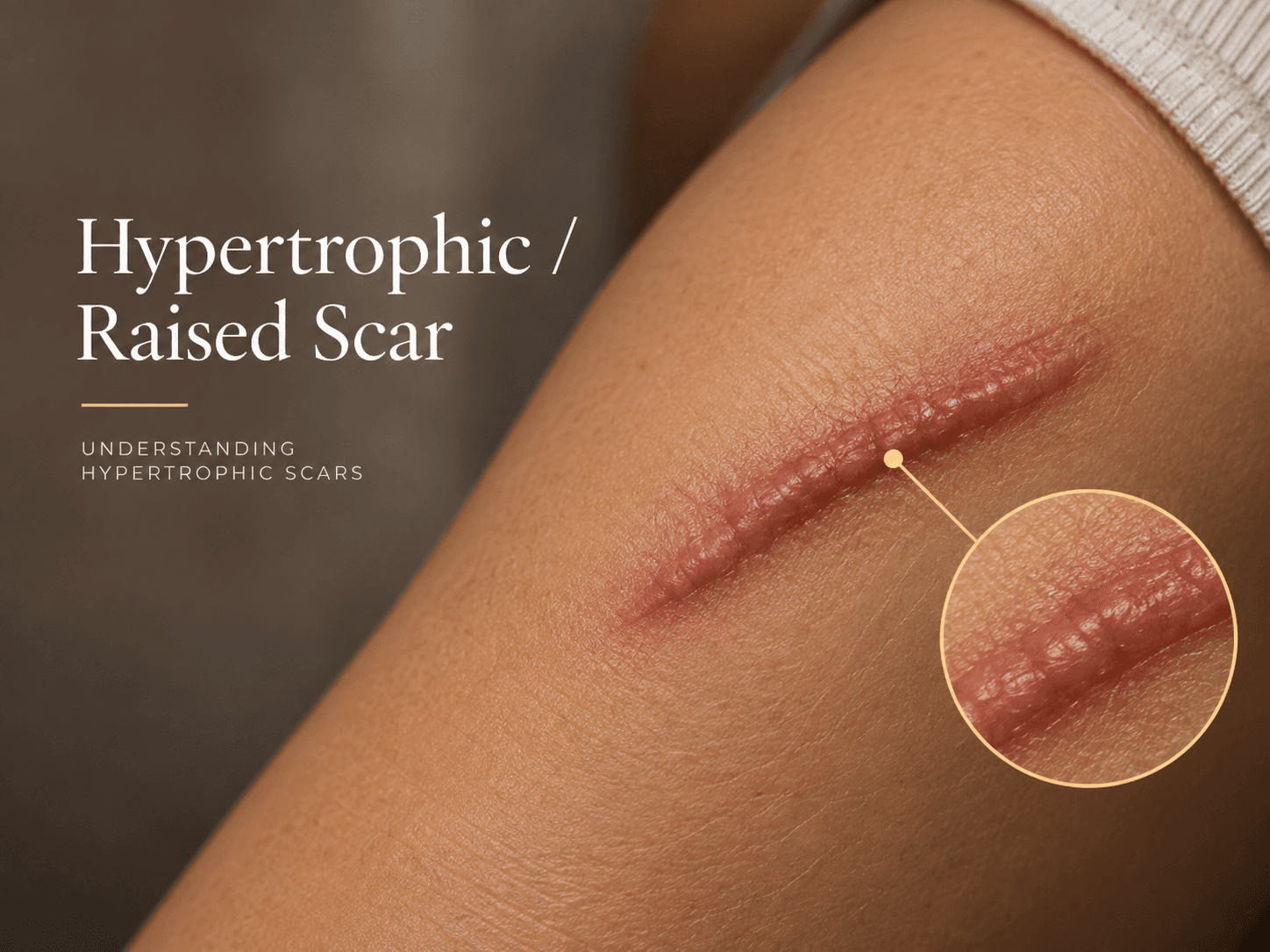
A raised scar sits above the surrounding skin. Most raised scars are either hypertrophic or keloid, and telling them apart matters because they behave and respond to treatment differently.
Hypertrophic scars
Hypertrophic scars are red, raised scars that stay within the boundary of the original wound. They may thicken for up to about six months and often soften and flatten over the following one to two years.
Keloid scars
A keloid scar grows beyond the edges of the original wound. Keloids are more common in younger people and darker skin tones, can be more difficult to treat, and may return after surgery - so surgery is approached with caution and specialist advice is recommended.
What may help
Depending on the scar, silicone gels or sheets, a course of steroid injections, pressure or, in selected cases, laser may help a raised scar soften and flatten. Your surgeon can advise which options, if any, may suit your scar. Treatment aims to improve a raised scar, not remove it completely.
When to seek advice
If a scar becomes increasingly raised, itchy or painful, or grows beyond the original wound, it is worth having it assessed.
This information is for general guidance only and is not a substitute for advice from a qualified clinician. Reviewed against NHS guidance.