Scar Care After Surgery
Helping a new scar heal well
Practical, consultant-led guidance on caring for a scar after surgery - always guided by your own surgical team.
Early wound care
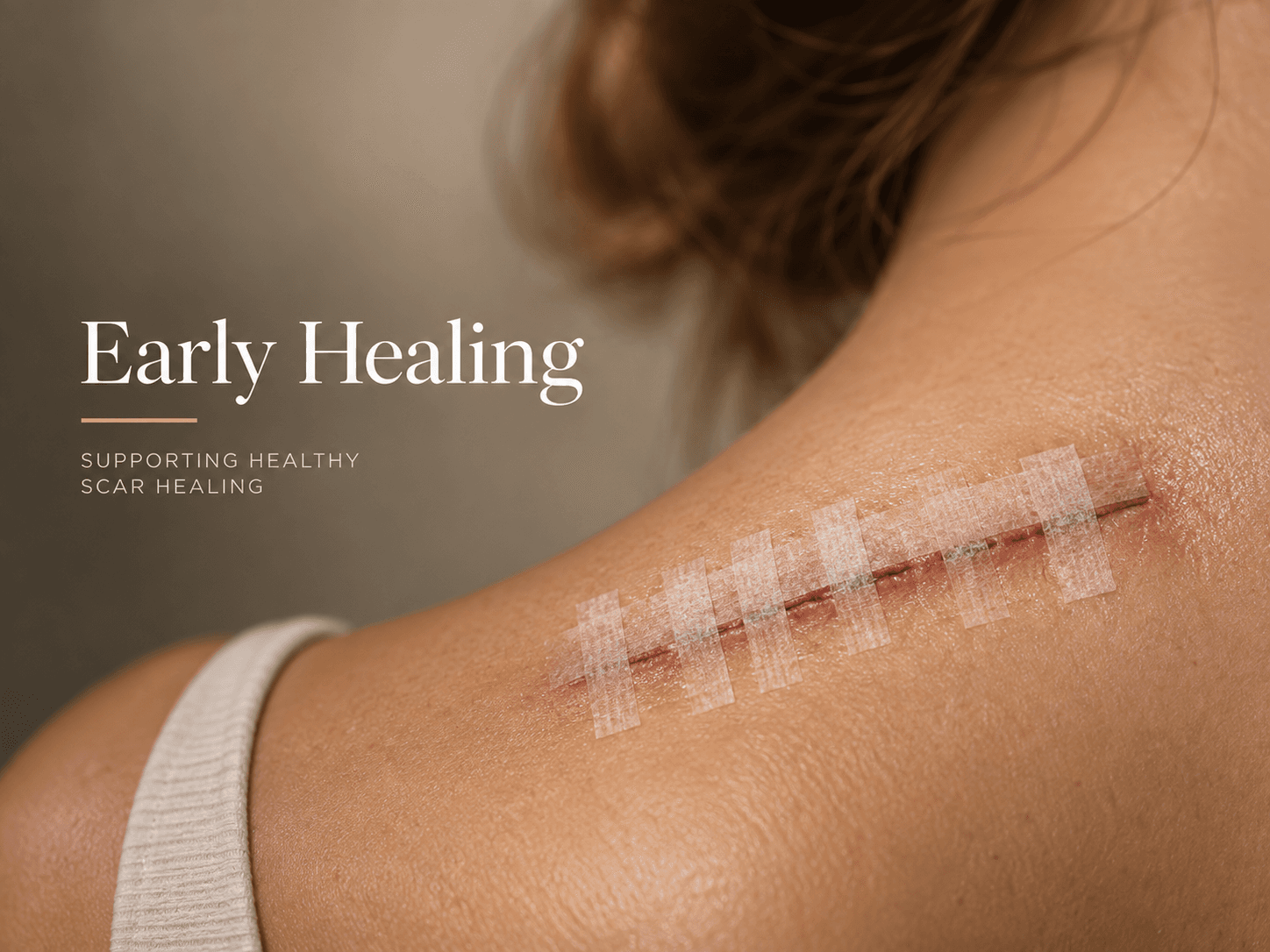
Keep the wound clean and dry and follow the specific instructions given by your surgical team. Do not start massage or silicone on an open or healing wound.
When scar care normally begins
Active scar care such as massage usually begins about four weeks after surgery, once the wound has fully healed. Your surgical team will confirm the right time for you.
Silicone gels and sheets
Silicone is commonly used while a scar matures. Applied to clean, healed skin, it is generally used for around 12 hours a day for at least three months and may help a red or raised scar settle.
Scar massage
Once the wound has healed, gently massaging the scar with an unperfumed moisturiser for a few minutes, two to three times a day, may help soften and flatten it. Stop and seek advice if the area becomes sore, inflamed or blistered.
Sun protection
A new scar can burn easily and darken in the sun. Keep it covered and use a high-factor sunscreen (SPF 30 or above) for at least a year.
Exercise and tension across the wound
Avoid stretching or putting tension across a healing wound, as this can widen the scar. Follow your surgical team’s guidance on returning to activity.
Clothing and compression
For some procedures, compression garments or supportive clothing are recommended to support healing. Your surgical team will advise if this applies to you.
What changes are normal
Redness, firmness, itching and slight lumpiness are all common in a healing scar and usually settle over time.
When to contact your surgical team
Increasing pain, redness, swelling, heat, discharge or a wound that reopens should be checked promptly. If you have any concerns, contact your surgical team.
This information is for general guidance only and is not a substitute for advice from a qualified clinician. Reviewed against NHS guidance.