On this page
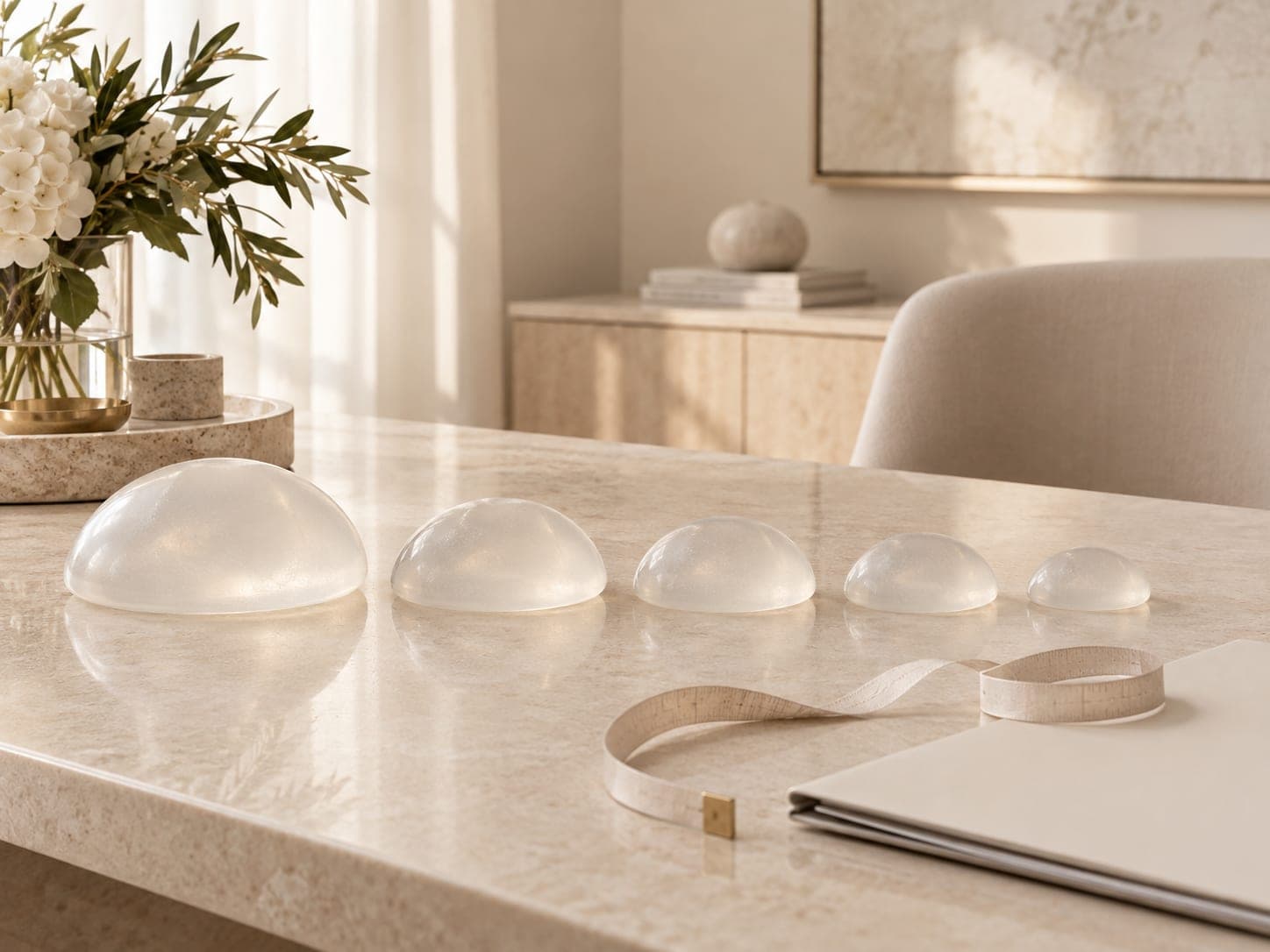
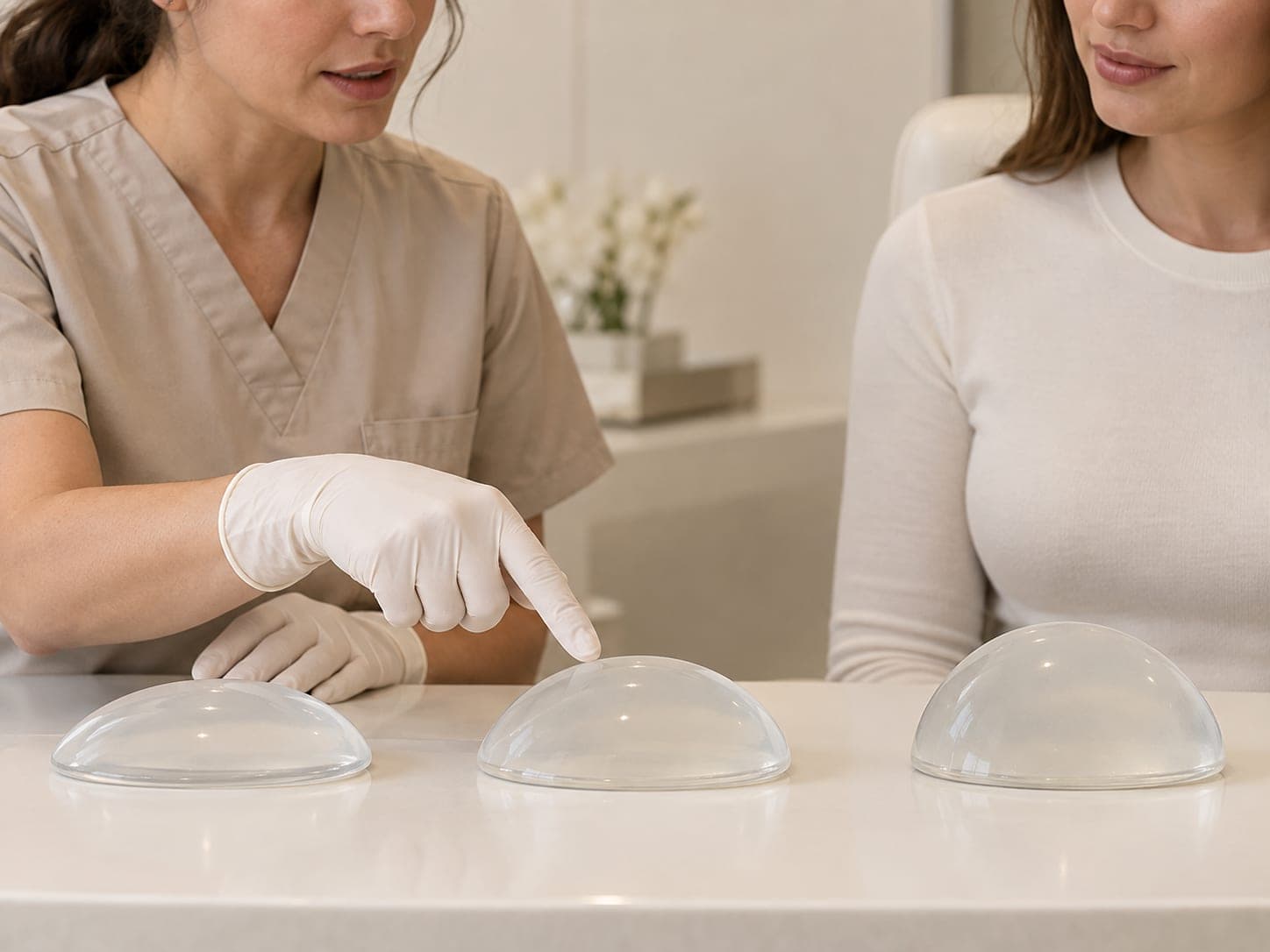
Breast implant profiles explained simply: the “profile” of an implant describes how far it projects forward from the chest for a given base width. Implants of the same volume can have different profiles, so two people choosing the same size in cubic centimetres may get quite different looks depending on the profile selected. Profiles are usually described as low, moderate, high and extra-high, and the right one depends on your chest width and the result you want.
This guide explains what profile means, how it affects the outcome, and what may guide the choice. It is general information, and your own recommendation can only come from a personal assessment.
At a glance
- Profile = how much an implant projects for a given base width.
- Same volume, different profile = a different look.
- Lower profiles are wider and flatter; higher profiles are narrower and more projected.
- Chest width and desired look guide the choice.
- Profile is chosen alongside size, shape and placement.
What implant profile actually means
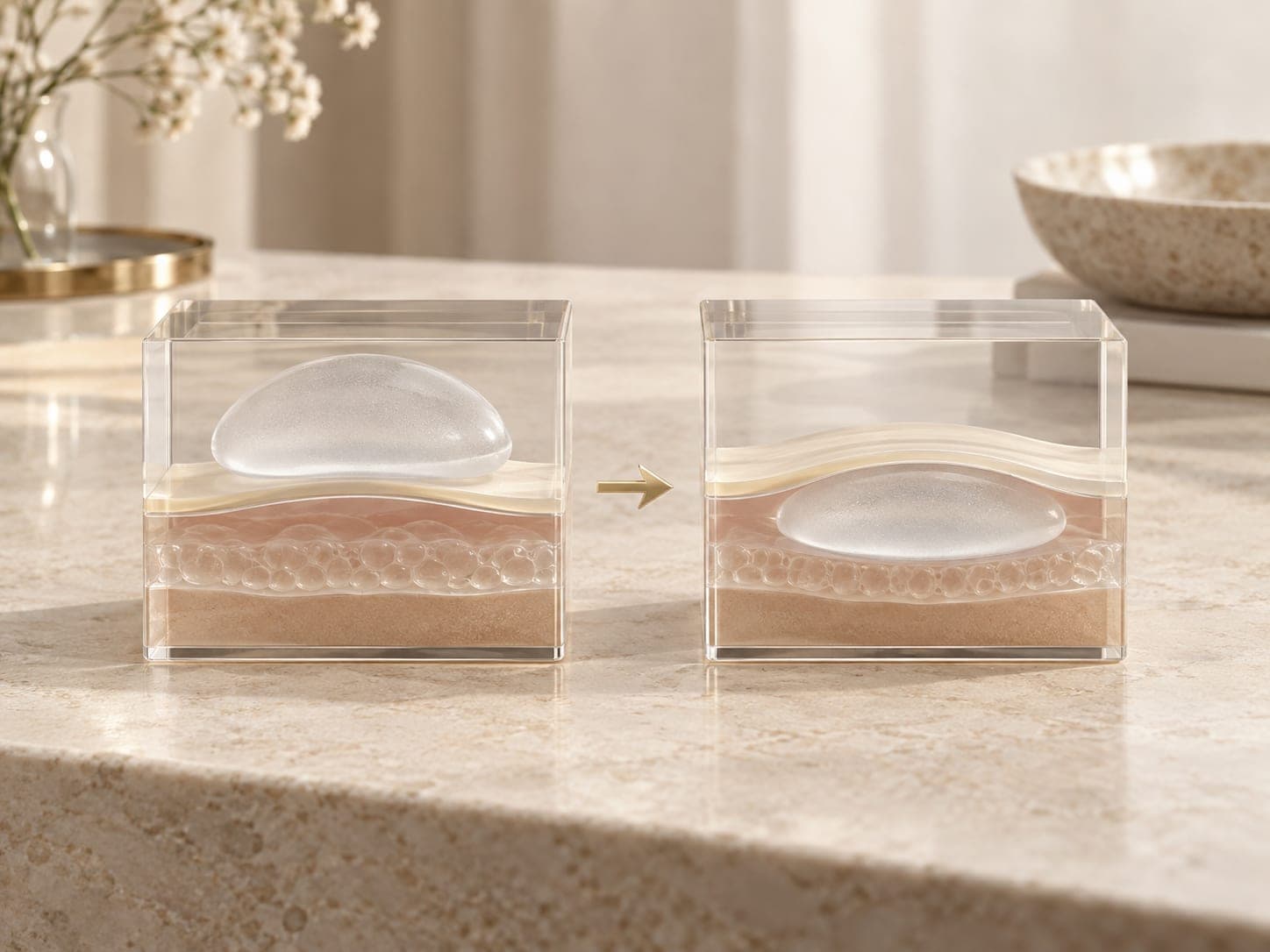
Every implant has a base (the part against the chest) and a projection (how far it stands forward). Profile describes the relationship between the two. A lower-profile implant spreads its volume over a wider base with less forward projection, while a higher-profile implant concentrates the same volume into a narrower base with more projection. This is why profile, not just volume, shapes the final look.
The main profile types
Low profile
Wider and flatter, suited to broader chests or a subtle result where the volume is spread across the breast.
Moderate profile
A middle option balancing width and projection, often chosen for a natural look on average frames.
High and extra-high profile
Narrower with more forward projection, which can suit narrower chests or those wanting a fuller, more projected shape.
How profile affects the look
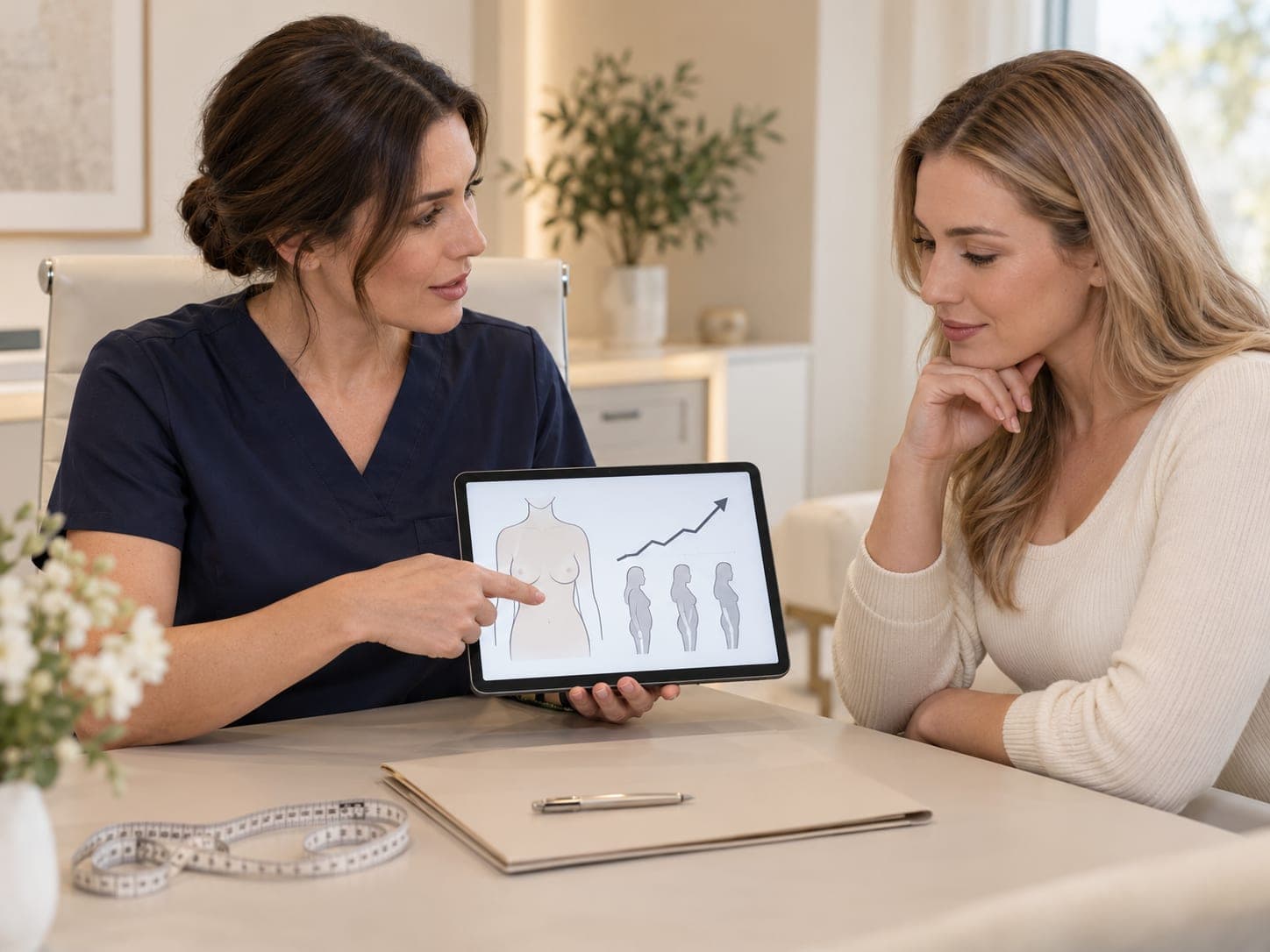
Because profile changes projection for a given width, it strongly influences whether a result looks subtle and spread across the chest or fuller and more forward-projecting. Matching the implant base to your own chest width is important: an implant too wide or too narrow for your frame can look unnatural or sit poorly. Your surgeon measures your chest to recommend profiles that fit you. You can read more on our breast augmentation page.
How profile fits with other choices
Profile is chosen together with implant volume, shape (round or teardrop), material and placement (over or under the muscle). All of these interact to produce the final look and feel, which is why surgeons consider them as a package rather than in isolation. Our breast implant safety resource covers wider considerations, and our existing article on breast uplift versus implants gives helpful context on augmentation choices.
What guides the choice for you
The main factors are your chest and breast base width, how much projection you want, your existing tissue and the overall look you are aiming for. Someone with a narrow chest wanting fullness may be guided towards a higher profile, while someone broader seeking subtlety may suit a lower one. The aim is a natural, proportionate result that fits your body.
Risks and limitations
Profile choice does not remove the general risks of breast augmentation, which include bleeding, infection, changes in sensation, capsular contracture, rippling, malposition and the likelihood of further surgery over a lifetime. A profile poorly matched to your frame can affect the look and how the result wears over time. Results cannot be guaranteed. Your surgeon will explain the risks relevant to your choices.
Is breast augmentation right for you?
The most suitable profile, and whether augmentation is appropriate, depend on your measurements and goals, assessed in person. A consultation allows your surgeon to measure your chest and recommend profiles likely to suit you.
How profile affects feel and how the result wears
Profile influences not only the look but, to some extent, how a result feels and wears over time. A higher-profile implant concentrates volume into a narrower, more projected shape, which some people prefer for fullness, while a lower profile spreads volume more broadly for a softer, flatter appearance. How noticeable the implant feels can depend on how much of your own tissue covers it, which is why profile is considered alongside placement and your tissue thickness.
Over the years, factors such as skin quality, weight changes and gravity affect all implants, and a profile poorly matched to your frame may show these changes more. Matching profile carefully to your chest width and tissue gives the best chance of a natural result that ages well. Your surgeon will weigh these longer-term considerations, not just the immediate look, when recommending a profile for you.
Breast implant profiles explained in short
With breast implant profiles explained, the key idea is that profile controls projection for a given base width, so it shapes the look as much as volume does. Choosing a profile that matches your chest and goals, alongside size, shape and placement, is central to a natural result. The best next step is a personal assessment, and you are welcome to arrange a consultation to discuss your options.
Frequently asked questions
What does implant profile mean?
Profile describes how far an implant projects forward for a given base width. The same volume in a different profile produces a different look.
Which implant profile is most natural?
There is no single answer; a natural look depends on matching profile to your chest width and tissue. Moderate profiles suit many average frames, but this is individual.
Can two implants of the same size look different?
Yes. Two implants of the same volume but different profiles can look quite different, because profile changes how the volume is distributed.
Does a higher profile mean a bigger result?
Not necessarily bigger in volume, but more projected. A higher profile concentrates volume into a narrower, more forward-projecting shape.
How is profile chosen?
Your surgeon measures your chest and considers your goals, then recommends profiles that fit your frame, alongside decisions on size, shape and placement.
This article is for general information only and does not replace personalised medical advice. Results vary between individuals, cannot be guaranteed, and all surgery carries risks. Suitability can only be determined through an individual consultation with a qualified surgeon.