On this page
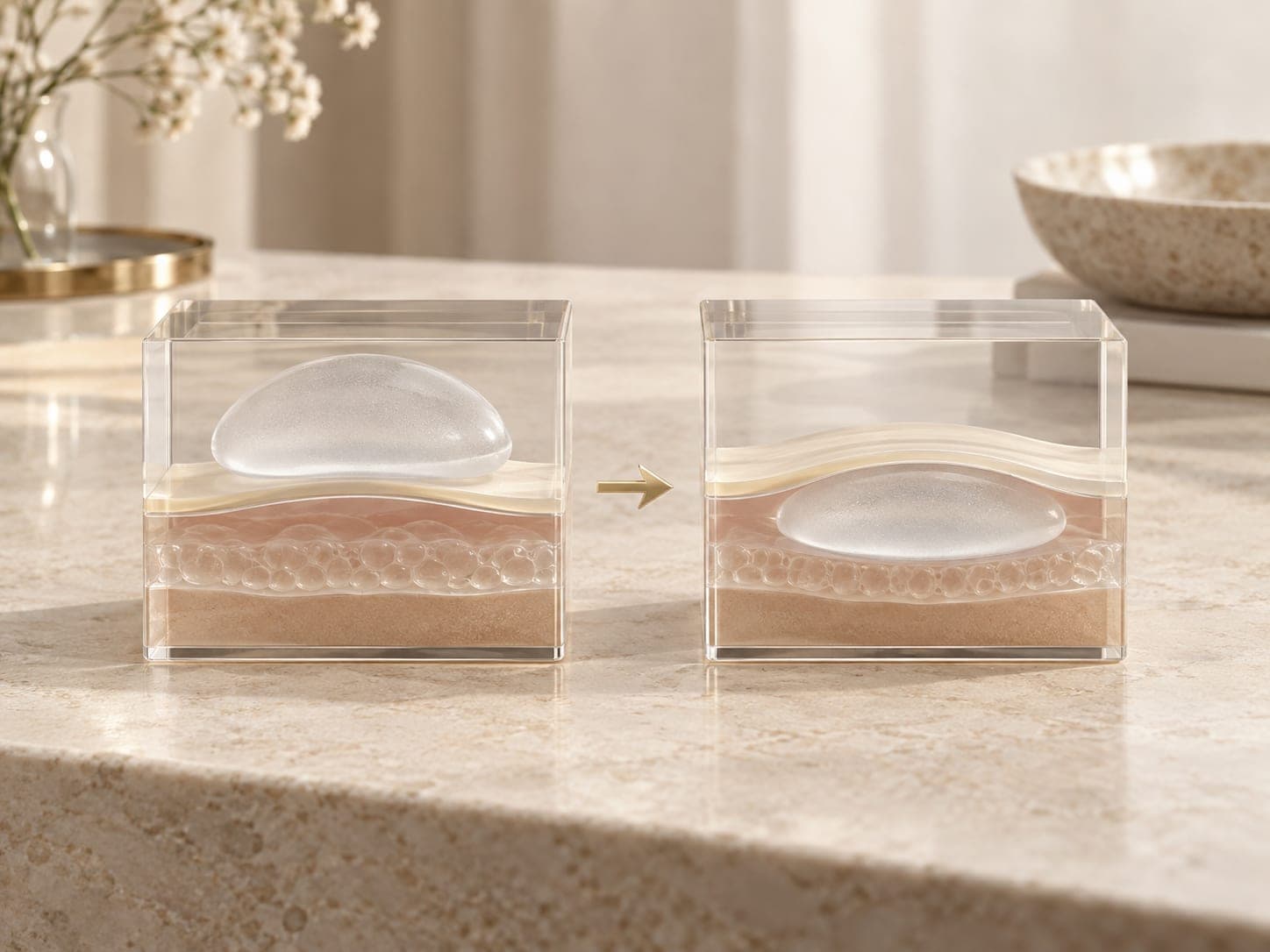
When it comes to breast implants over or under the muscle, there is no single right answer that suits everyone. “Over the muscle” (subglandular) places the implant behind the breast tissue but in front of the chest muscle, while “under the muscle” (submuscular or, more commonly, dual-plane) places it partly or wholly beneath the chest muscle. Each position has advantages and trade-offs, and the choice depends on your body, your tissue and your goals.
This guide explains how the two placements differ, their pros and cons, and what may influence the decision, so you can have an informed discussion with your surgeon. It is general information and does not replace an individual assessment.
At a glance
- Over the muscle: implant in front of the chest muscle, behind the breast tissue.
- Under the muscle: implant partly or fully beneath the chest muscle.
- Under-muscle placement often gives a more natural upper-breast slope and can lower some risks, but recovery may be more uncomfortable.
- Over-muscle placement can mean a simpler recovery but may show implant edges more in thin tissue.
- The right choice depends on your anatomy and goals, assessed in person.
What “over the muscle” means
In subglandular placement, the implant sits behind the breast tissue but on top of the pectoral muscle. This can make surgery and recovery a little simpler and may suit people with enough natural breast tissue to cover the implant. However, in those with little breast tissue, implant edges or rippling can be more visible, and some studies suggest certain risks may differ compared with under-muscle placement.
What “under the muscle” means
In submuscular or dual-plane placement, the implant is positioned partly or fully beneath the pectoral muscle. This extra soft-tissue cover can give a smoother, more natural slope in the upper breast, may reduce visible rippling, and is often associated with a lower rate of certain complications such as capsular contracture in some studies. The trade-off is that recovery can be more uncomfortable initially, and the muscle can move the implant during flexing in some people.
Comparing the two placements
Neither option is universally better. Under-muscle placement is frequently chosen for a natural look, particularly in slimmer patients, and may help with imaging of the breast later. Over-muscle placement can appeal where there is ample tissue and a simpler recovery is a priority. Factors such as your breast tissue thickness, activity levels and the implant chosen all feed into the decision. You can read more about the procedure on our breast augmentation page, and our breast implant safety resource covers wider safety considerations.
How recovery may differ
Recovery after under-muscle placement can involve more early discomfort because the muscle is affected, whereas over-muscle recovery is sometimes reported as easier in the first days. Either way, most people return to non-physical work within a week or two and reintroduce exercise gradually. Our breast augmentation recovery timeline sets out what to expect week by week.
What influences the choice
Your surgeon considers several things when advising on placement, including how much natural breast tissue you have, your skin quality, your build and lifestyle, the type and size of implant, and your aesthetic goals. Someone very active in chest-focused sport, for example, may be advised differently from someone prioritising the most natural upper-pole slope.
Risks and limitations
All breast augmentation carries risks, including bleeding, infection, changes in sensation, capsular contracture, implant rippling, malposition and the need for further surgery over a lifetime, as implants are not considered lifelong devices. Some risks vary with placement, but none is eliminated by either option. Results cannot be guaranteed. Your surgeon will explain the risks relevant to your chosen approach.
Is breast augmentation right for you?
Which placement suits you, and whether augmentation is appropriate at all, depends on your anatomy, health and goals, assessed individually. A consultation allows your surgeon to examine you, discuss the trade-offs and recommend the option most likely to meet your aims safely.
Can implant placement be changed later?
Placement is not entirely fixed for life, but changing it is a further operation rather than a simple adjustment. Some people move from over-the-muscle to under-the-muscle placement, or vice versa, during revision surgery, for example to improve the look, address rippling or manage a complication. This is a more involved procedure than the original and carries its own risks and recovery.
Because of this, it is worth taking time over the initial decision rather than assuming placement can easily be revised. Your surgeon will aim to recommend the placement most likely to give you a lasting, natural result the first time. If you already have implants and are considering a change, an assessment can establish what is realistic for your tissues and current implants, and whether a change in placement would genuinely help. As with any revision, the outcome cannot be guaranteed, and your surgeon will talk through the trade-offs.
Deciding on breast implants over or under the muscle
The choice between breast implants over or under the muscle is a genuine trade-off rather than a simple better-or-worse decision. Under-muscle placement often favours a natural look and may lower some risks, while over-muscle placement can offer a simpler recovery in the right candidate. The best way to decide is a personal assessment, and you are welcome to arrange a consultation to discuss which suits you.
Frequently asked questions
Is it better to have implants over or under the muscle?
Neither is universally better. Under-muscle placement often gives a more natural slope and may lower some risks; over-muscle can mean a simpler recovery. The right choice depends on your anatomy and goals.
Does under-the-muscle placement hurt more?
Early recovery can be more uncomfortable because the muscle is involved, though this varies. Most people manage well with the pain relief their team recommends.
Which placement looks more natural?
Under-muscle placement is often chosen for a natural upper-breast slope, particularly in slimmer patients, but a good result is possible with either in the right candidate.
Does placement affect breast screening?
Placement can influence how the breast is imaged. Tell any mammography service that you have implants so appropriate techniques can be used.
Will I need surgery again in future?
Implants are not lifelong devices, so further surgery may be needed at some point regardless of placement. Your surgeon can discuss what to expect over time.
This article is for general information only and does not replace personalised medical advice. Results vary between individuals, cannot be guaranteed, and all surgery carries risks. Suitability can only be determined through an individual consultation with a qualified surgeon.