On this page
Choosing breast implant size is one of the most important decisions in breast augmentation, and it involves far more than picking a cup size. Surgeons balance your chest measurements, the amount and quality of your breast tissue, your body frame and your goals to recommend a range of implant volumes that are likely to look proportionate and be safe. Bigger is not always better, and the “right” size is the one that suits your body and your aims.
This guide explains how size is decided, why cup size is an unreliable target, and how to approach the choice sensibly with your surgeon. Your own recommendation can only come from an individual assessment.
At a glance
- Implant size is measured in volume (cc), not cup size.
- Your chest width and tissue set the sensible range of options.
- Very large implants can carry higher risks and strain tissues over time.
- Sizing sessions and trial sizers help you visualise the result.
- The best choice balances your goals with what is safe and proportionate.
Why cup size is not a reliable guide
Cup size varies between bra brands and styles, so the same person can be different cups in different bras. Because of this, surgeons work in implant volume (cubic centimetres) and in how an implant fits your chest, rather than promising a specific cup letter. Focusing on the look and proportion you want is more useful than a number on a label.
What determines the right size for you
Several factors shape the sensible range of implant sizes:
- Chest and breast width: the base width of your chest limits how wide an implant can sit naturally.
- Breast tissue and skin: the amount and quality of your tissue affects how well it can cover and support an implant.
- Your frame: height and build influence what looks balanced.
- Lifestyle and goals: activity levels and the look you want both matter.
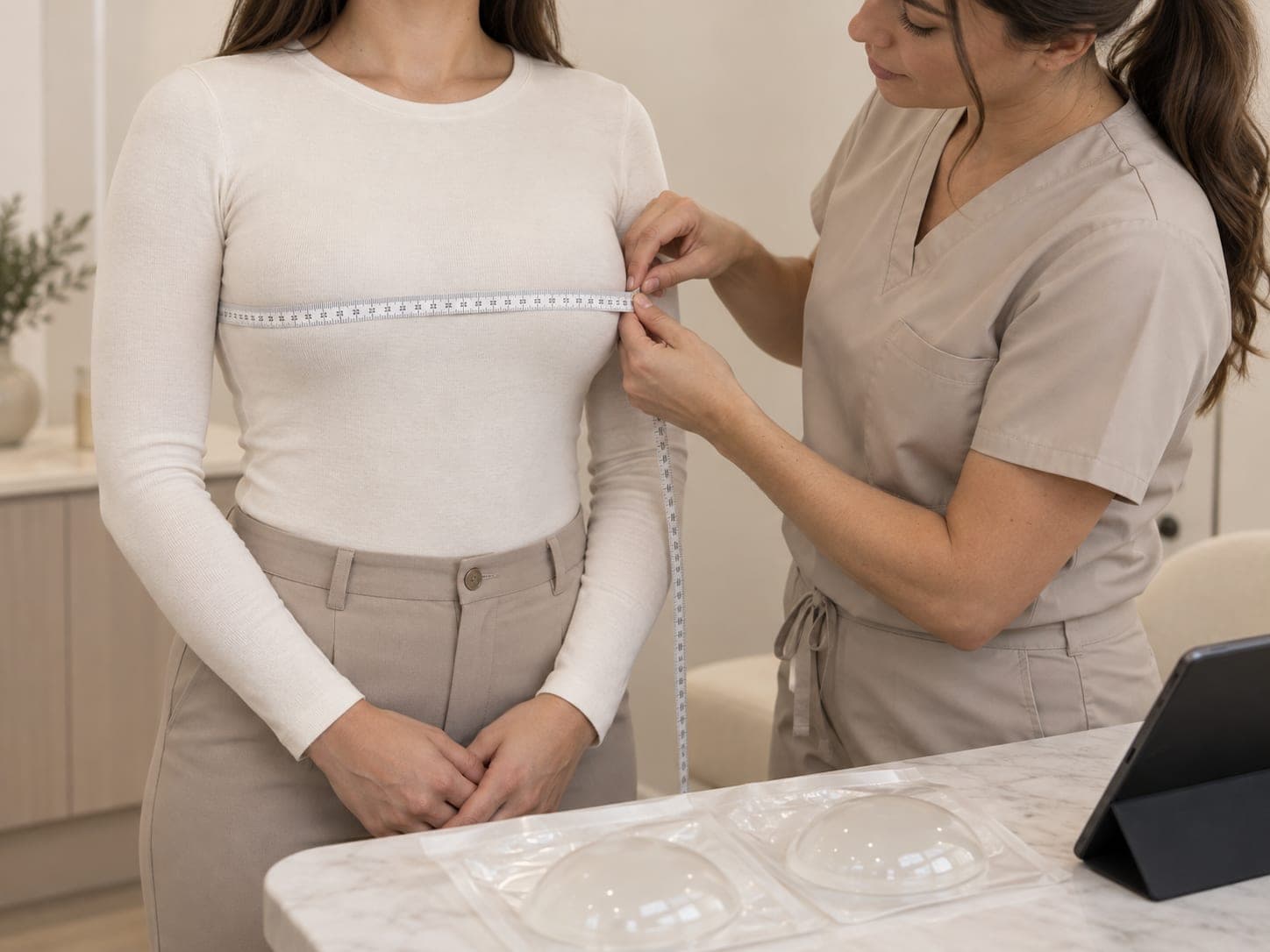
Your surgeon measures these and recommends a range that should look proportionate and be safe. You can read more on our breast augmentation page.
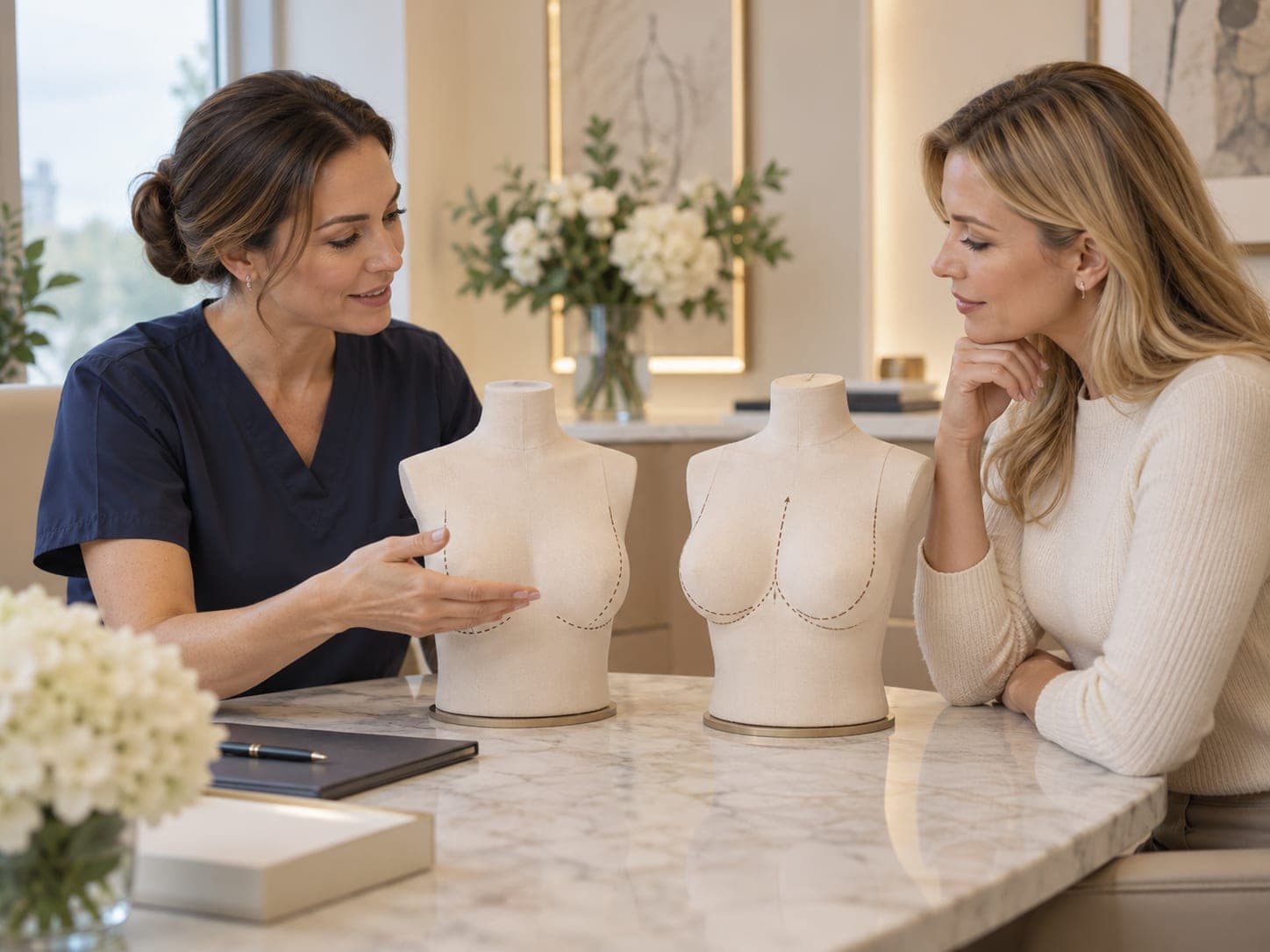
How surgeons help you visualise size
Many clinics use trial sizers worn in a bra, or measurements and photographs, to help you picture the result. Some use imaging tools. These aids are helpful, but the feel of a sizer is not identical to a placed implant, so they give a guide rather than an exact preview. Taking time over this step helps you feel confident in your decision.
Why bigger is not always better
Larger implants weigh more and can place greater strain on the skin and tissues over time, potentially contributing to sagging, thinning tissue, visible rippling or discomfort. Very large implants may also be more likely to need future surgery. A size that suits your frame is more likely to look natural and wear well. Our breast implant safety resource offers wider context, and our guide on whether plastic surgery is right for me may help you reflect on your goals.
Risks and limitations
Breast augmentation carries risks including bleeding, infection, changes in sensation, capsular contracture, rippling, implant malposition, and the likelihood of further surgery over a lifetime, as implants are not permanent devices. Choosing a size beyond what your tissues can comfortably support can increase some of these risks. Results cannot be guaranteed and change with time, weight and pregnancy. Your surgeon will explain the risks relevant to your chosen size.
Is breast augmentation right for you?
The most suitable size, and whether augmentation is appropriate, depend on your body and goals, assessed in person. A consultation allows your surgeon to measure you, discuss your aims and recommend a safe, proportionate range.
Living with your chosen size
It is common for feelings about size to settle over the first months after surgery, as swelling resolves and you adjust to your new shape. Many people find that a size which felt modest at the sizing stage looks and feels right once healed, because a placed implant integrates with your own tissue in a way a sizer cannot fully mimic.
Choosing to go significantly larger later usually means further surgery, with additional cost, recovery and risk, so it is worth aiming for a size you are comfortable with from the outset rather than planning to change it. Thinking about how your choice fits your everyday life, clothing, activities and how you would like to look in the long term, can help you feel confident. Your surgeon can talk through these practical points as part of helping you settle on a size that suits both your goals and your body.
Approaching the choice of breast implant size
Choosing breast implant size is about proportion, safety and your personal goals, not simply a cup letter. Working in volume, using sizers and listening to your surgeon’s assessment of what your body can support will help you reach a confident, realistic decision. The best next step is a personal assessment, and you are welcome to arrange a consultation to discuss what may suit you.
Frequently asked questions
How do I choose the right breast implant size?
By working with your surgeon in implant volume, considering your chest width, tissue and frame, and using sizers to visualise a proportionate result rather than aiming for a cup size.
Is a bigger implant always better?
No. Larger implants weigh more and can strain the tissues over time, potentially affecting the result and increasing some risks. A size that suits your frame often wears better.
Why don’t surgeons promise a cup size?
Cup sizing is inconsistent between brands, so surgeons work in volume and fit. You can discuss the look you want, and they will advise what is realistic.
Can I try implant sizes before deciding?
Many clinics offer trial sizers or imaging to help you visualise the result, though these give a guide rather than an exact preview of a placed implant.
Will my chosen size look the same in years to come?
Not necessarily. Weight changes, pregnancy, ageing and gravity all affect the breasts over time, so results are not guaranteed to be permanent.
This article is for general information only and does not replace personalised medical advice. Results vary between individuals, cannot be guaranteed, and all surgery carries risks. Suitability can only be determined through an individual consultation with a qualified surgeon.